
Swim Melbourne:
mapping places to swim
Melbourne, Australia
–––––
CASE STUDY
––
Overview
Melbourne is a city shaped by water: by Port Phillip Bay, the Birrarung (Yarra River), creeks, lakes, billabongs and pools woven through its suburbs. Yet not all water is swimmable, and not all communities have equal access to safe places to cool off, connect and belong.
Swim Melbourne is an interactive StoryMap that maps swimmable places across the city while telling the deeper stories of the communities, histories and ecologies connected to them. The project invites users to explore swimming not simply as exercise, but as a relationship - to place, to people and to Country.
More than a directory of swimming spots, this project explores what it means to create a “swimmable city”- one that supports ecological regeneration, social inclusion and climate resilience.
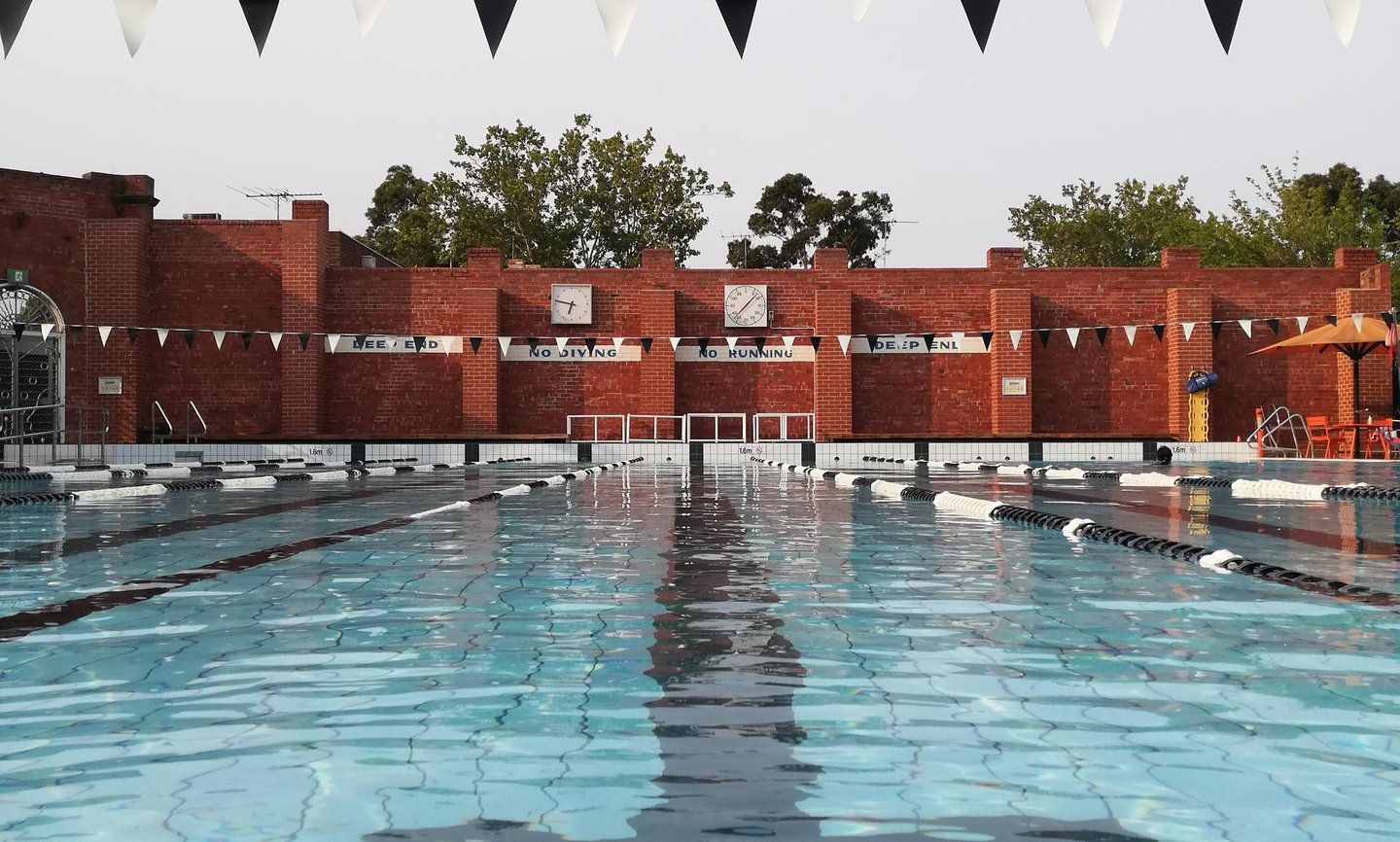
Carlton Baths, Melbourne. Photo: Nícolas Guerra-Tão
––
Points
of interest
The interactive map identifies indoor and outdoor pools, beaches, rivers, lakes and reservoirs across metropolitan Melbourne.
Community groups such as the Yarra Yabbies, Jellyfish Cold Water Swimmers, Williamstown Open Water Swimming and the Glamourhead Sharks demonstrate how swimming fosters connection, advocacy and belonging.
Inclusive initiatives such as Women’s Only Nights at Broadmeadows Pool and LGBTQIA+ community swimming spaces like Fitzroy Pools illustrate how access to water is also about dignity, identity and safety.
The project references the Urban Heat Index (Victoria State Government), revealing that some of Melbourne’s hottest and most vulnerable suburbs have the least access to public swimming sites.
Swim Melbourne begins with an acknowledgement of the Kulin Nations - Wurundjeri Woi Wurrung, Wadawurrung and Boonwurrung/Bunurong peoples - and recognises that these waters have been cared for and enjoyed by Indigenous communities for millennia.
The project was funded by RMIT University and created through collaboration between Rebecca Olive (Research), Maya Costa-Pinto (Data Collection) and Nícolas Guerra-Tão (StoryMap design).
“For me pools are full of all kinds of life, elements, history, and joys … Outdoors there is the light, the trees, the comfort of the contained space and black lines, the cool/warm contrasts of swimming at different times of year, the animals, the change rooms, the chemicals that keep the water clear, and much more. Indoors, there is also the heat, the seating, the towels, and more.”
Dr Rebecca Olive, Vice Chancellor’s Senior Research Fellow,
RMIT University Melbourne, Australia
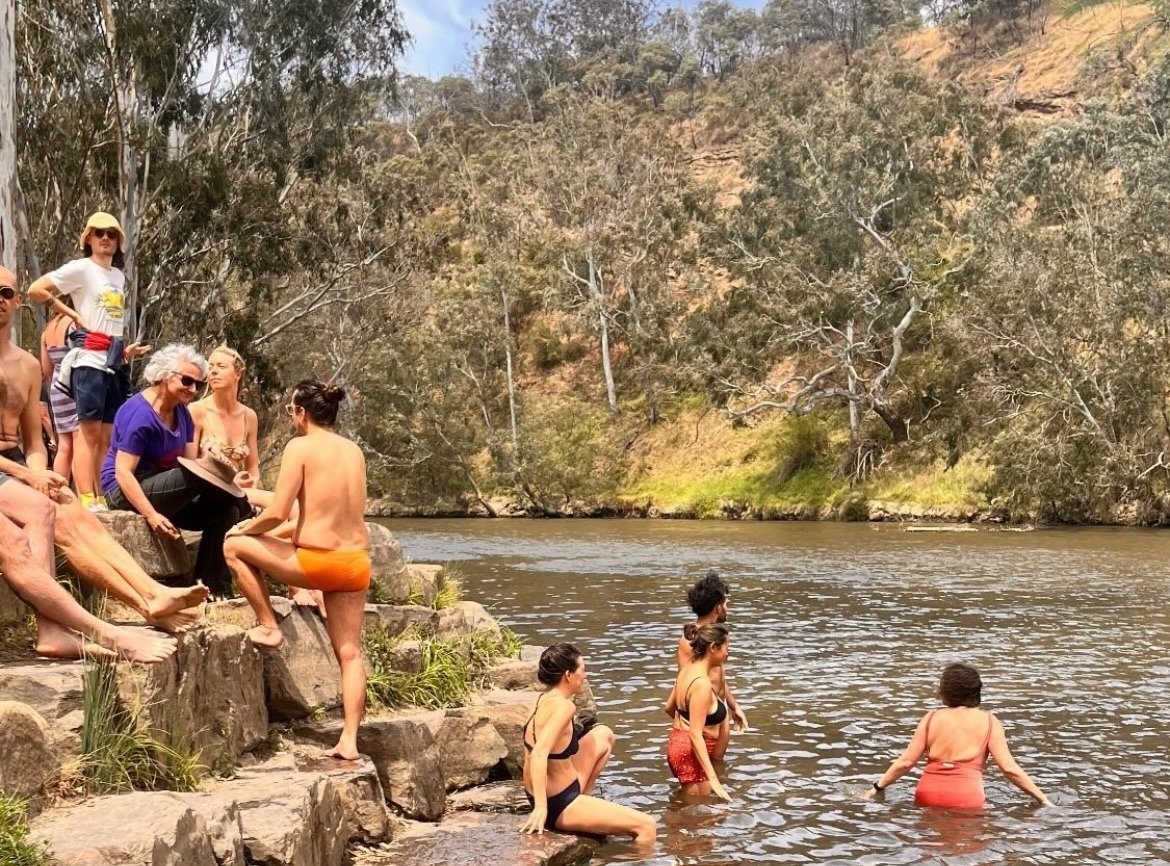
Swimmers at the Birrarung/Yarra. Photo: Alliance of Praxis Research
––
Conclusions
The Swim Melbourne project demonstrates how digital innovation can strengthen connections between people and water. By bringing pools, beaches and natural swimming sites together in one accessible, interactive platform, it makes it easier for residents and visitors to find safe, suitable places to swim.
Clear, centralised information supports informed decision-making, encourages participation and promotes more equitable access to aquatic spaces. As cities grow and climate pressures increase, digital tools such as this offer a scalable and inclusive way to expand access to water - helping to build healthier, safer and more water-confident communities.
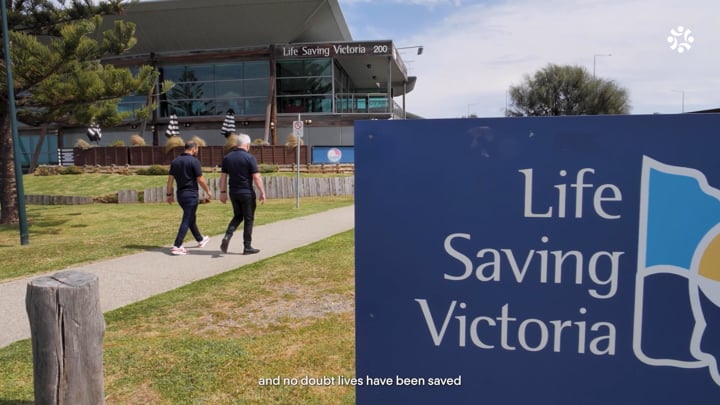
Community and water competency
Pathways for new Australians
Discover inspiring, thought-provoking perspectives of the world of swimming pools and aquatic activities.
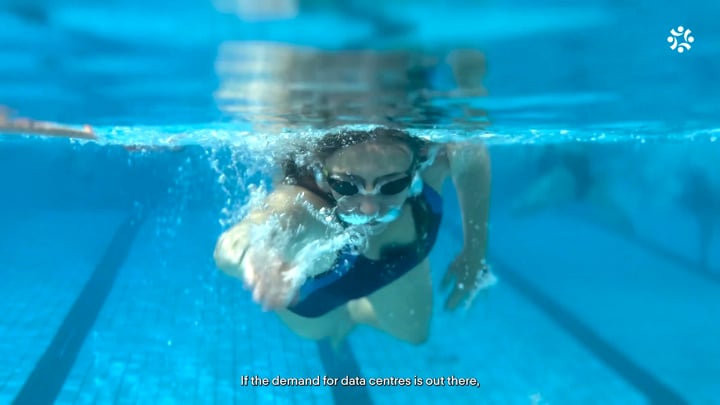
Swimming pools
and data centres
A sustainable symbiosis
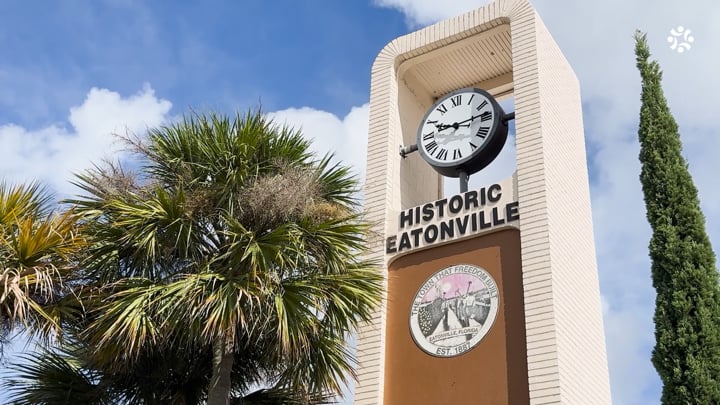
The pool that revitalized
a community
Eatonville, Florida, USA
Best-in-Class
projects



© 2025 Copyright. All rights reserved